[Location] Hangzhou China
[Duration] 8 weeks
[Individual] Architecture
Unlike the previous approach of large-scale demolition and construction in urban planning and construction, micro-renewal is based on the premise of protecting the city’s own texture and original appearance, and emphasizes the renewal of small local plots through appropriate scale and reasonable scale to improve the quality of life of the surrounding residents.
It contains two main aspects: firstly, the quality improvement of tiny spaces, and secondly, the revitalization and utilization of old buildings and structures.
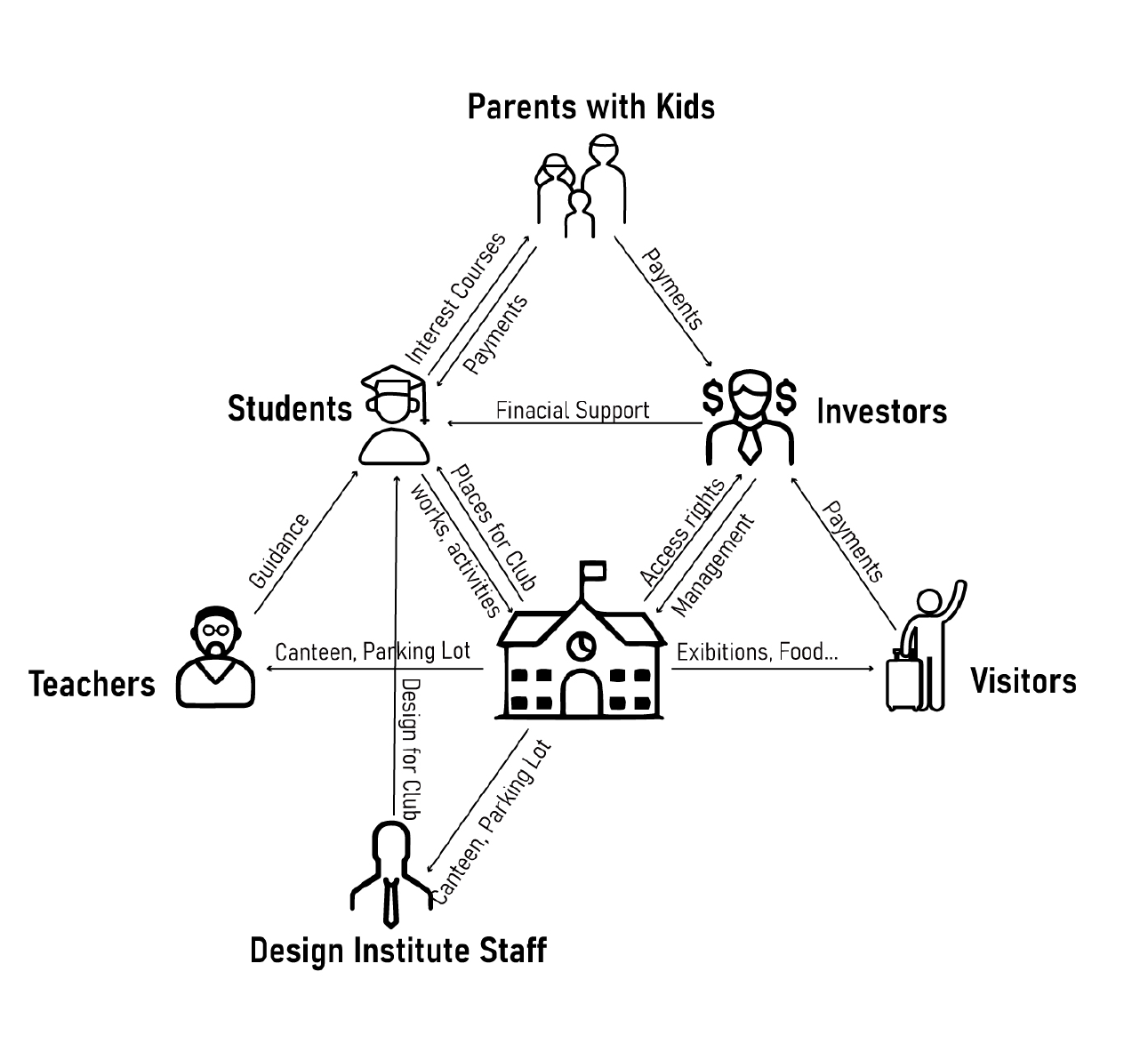
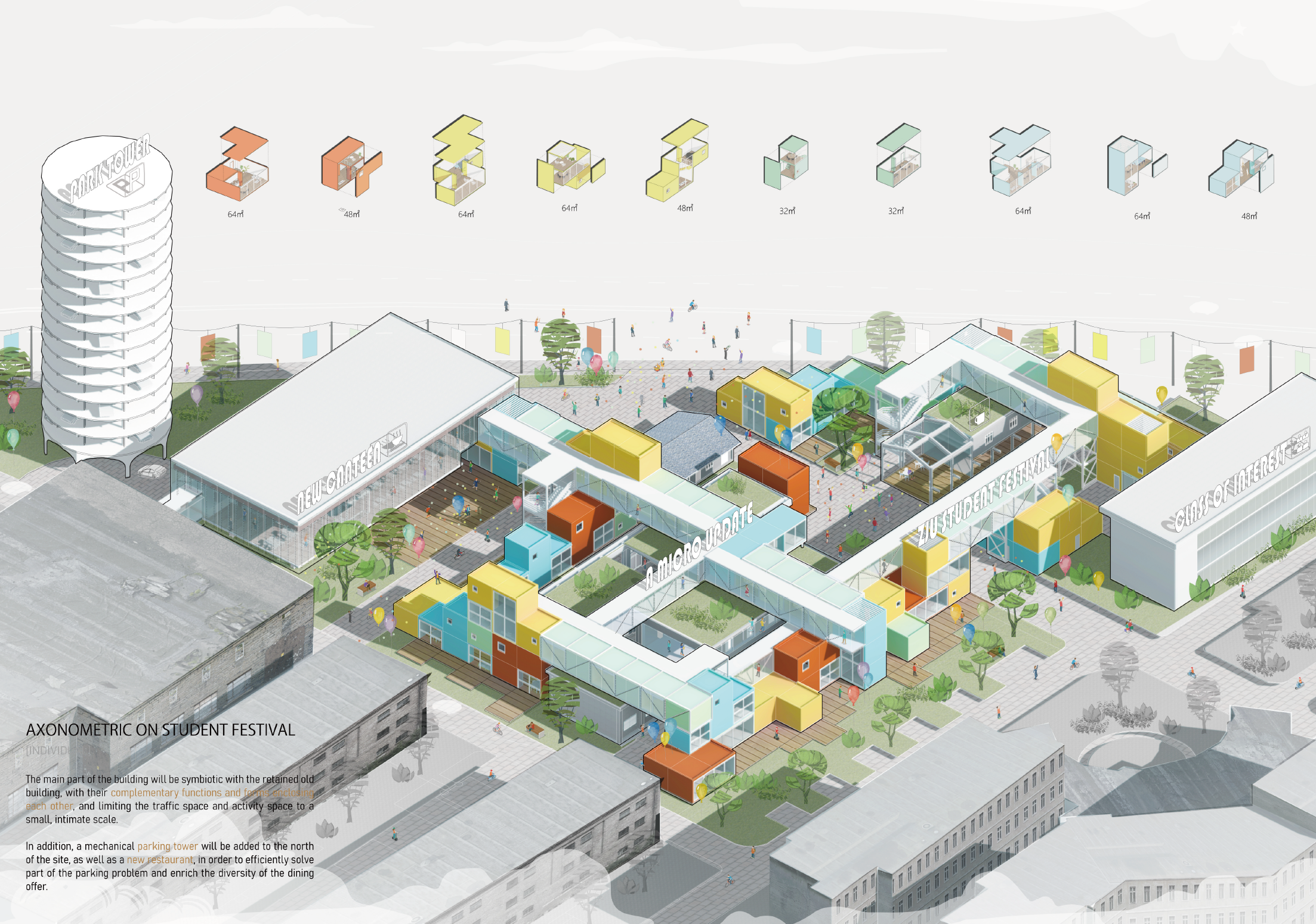
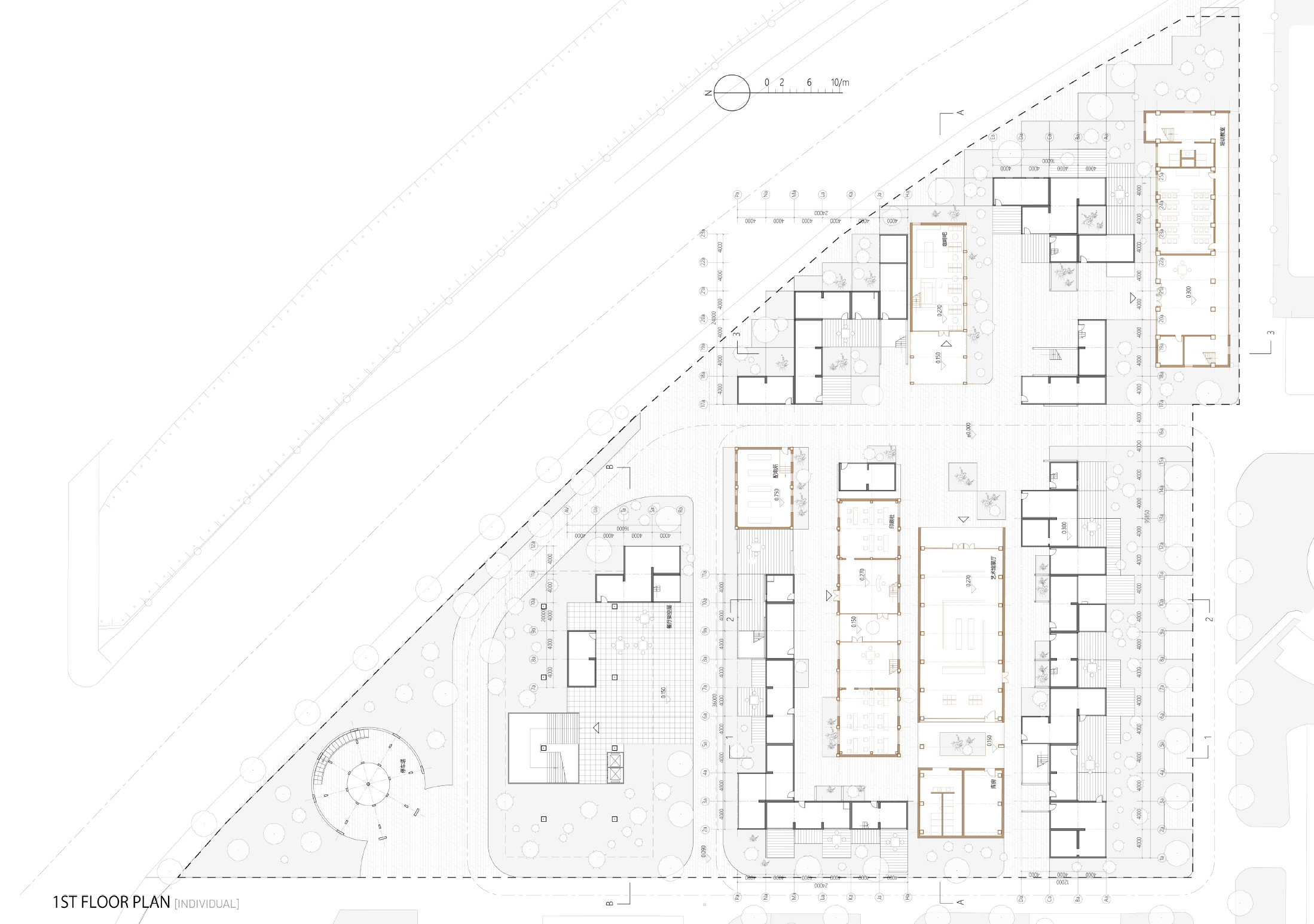
The site I have chosen for this project belongs to the former. The scheme will attempt to create a between the school and grey area the city that does not belong to the city, nor does it belong entirely to the school: the main part of the new building will be a community space for the students, free enough in form and function to adapt to the changing spatial needs over time, and the main body of the building will live in symbiosis with the preserved old building, with their complementary functions and forms enclosing each other, and limiting the space for traffic and activities to a small, intimate human scale.
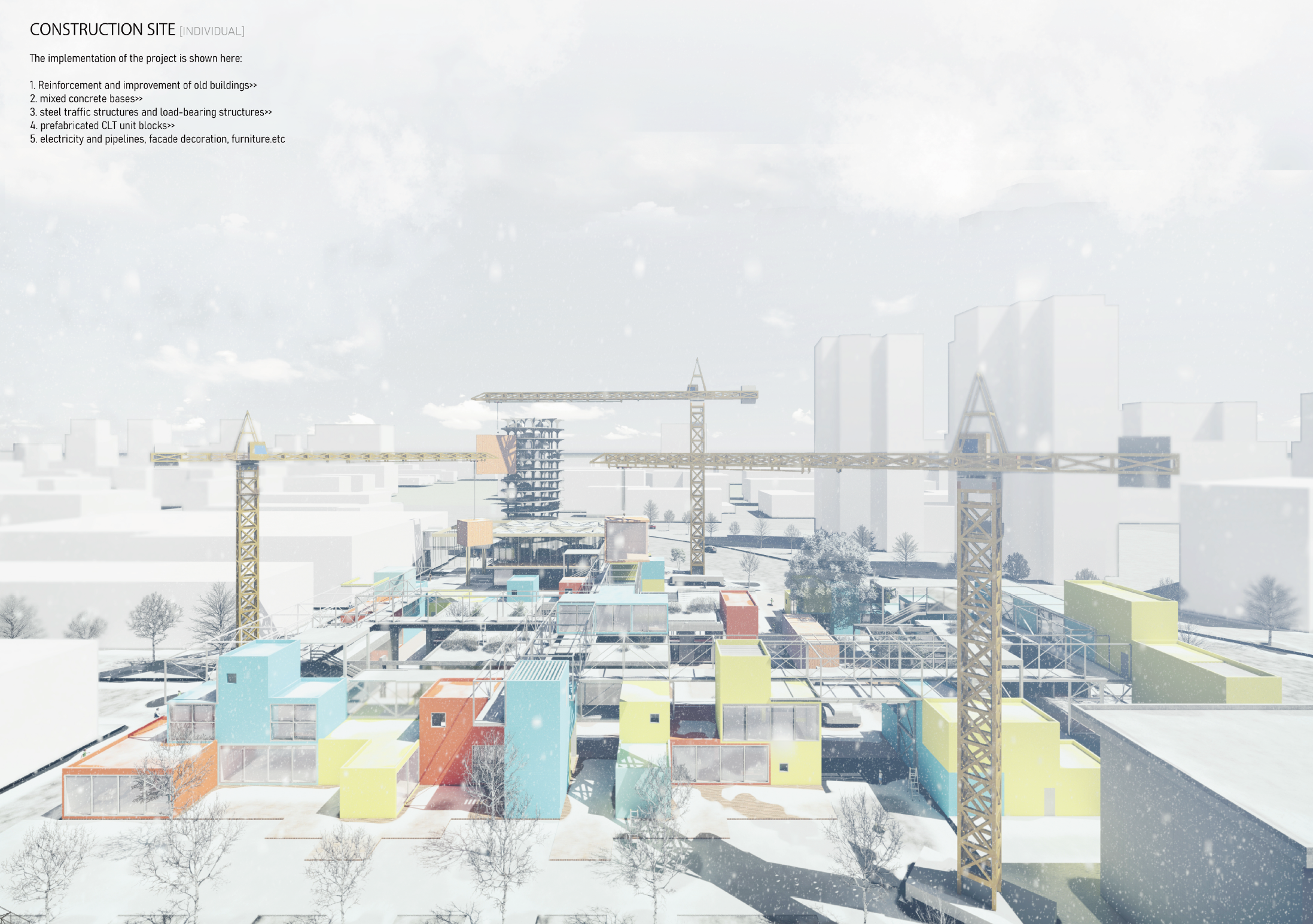
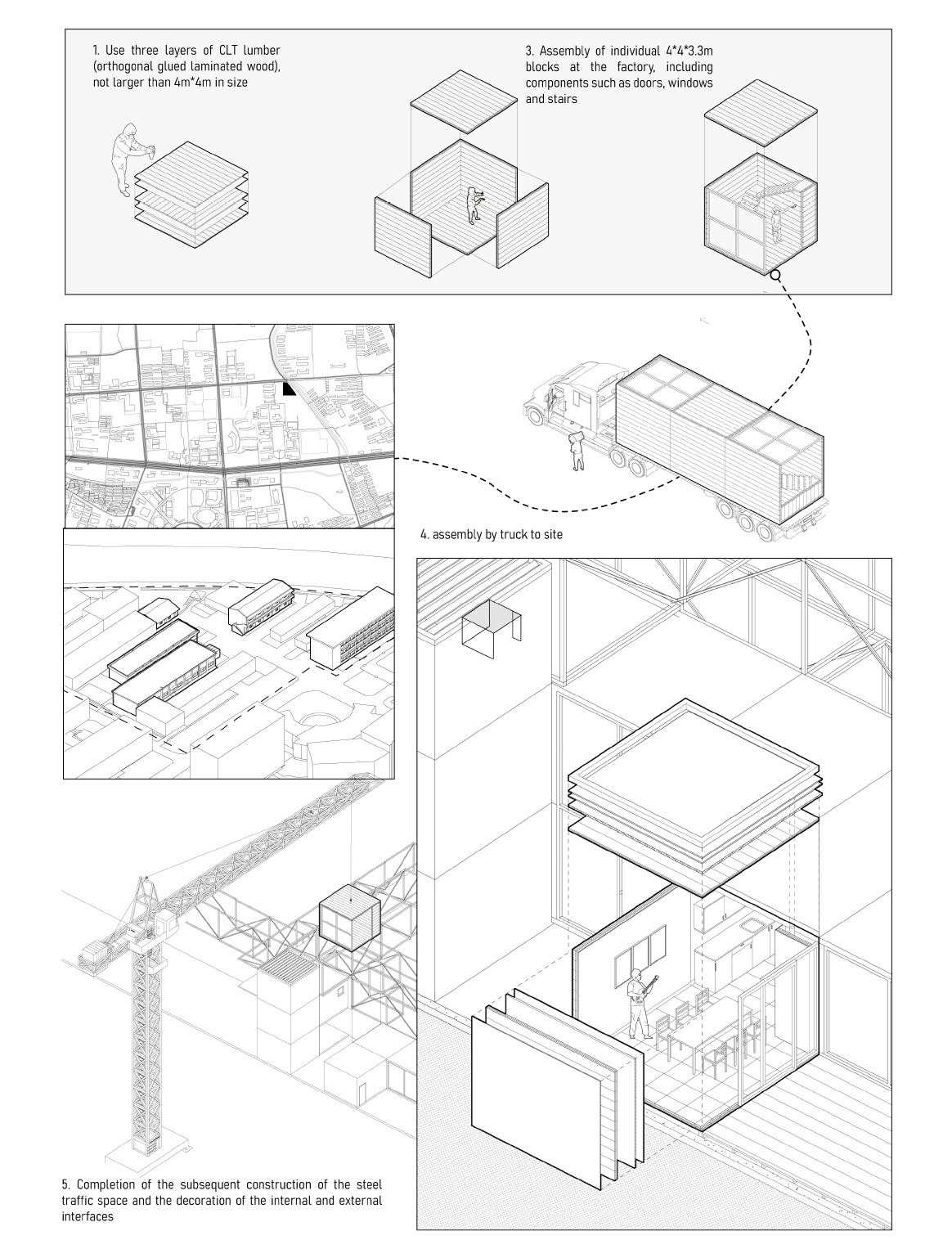
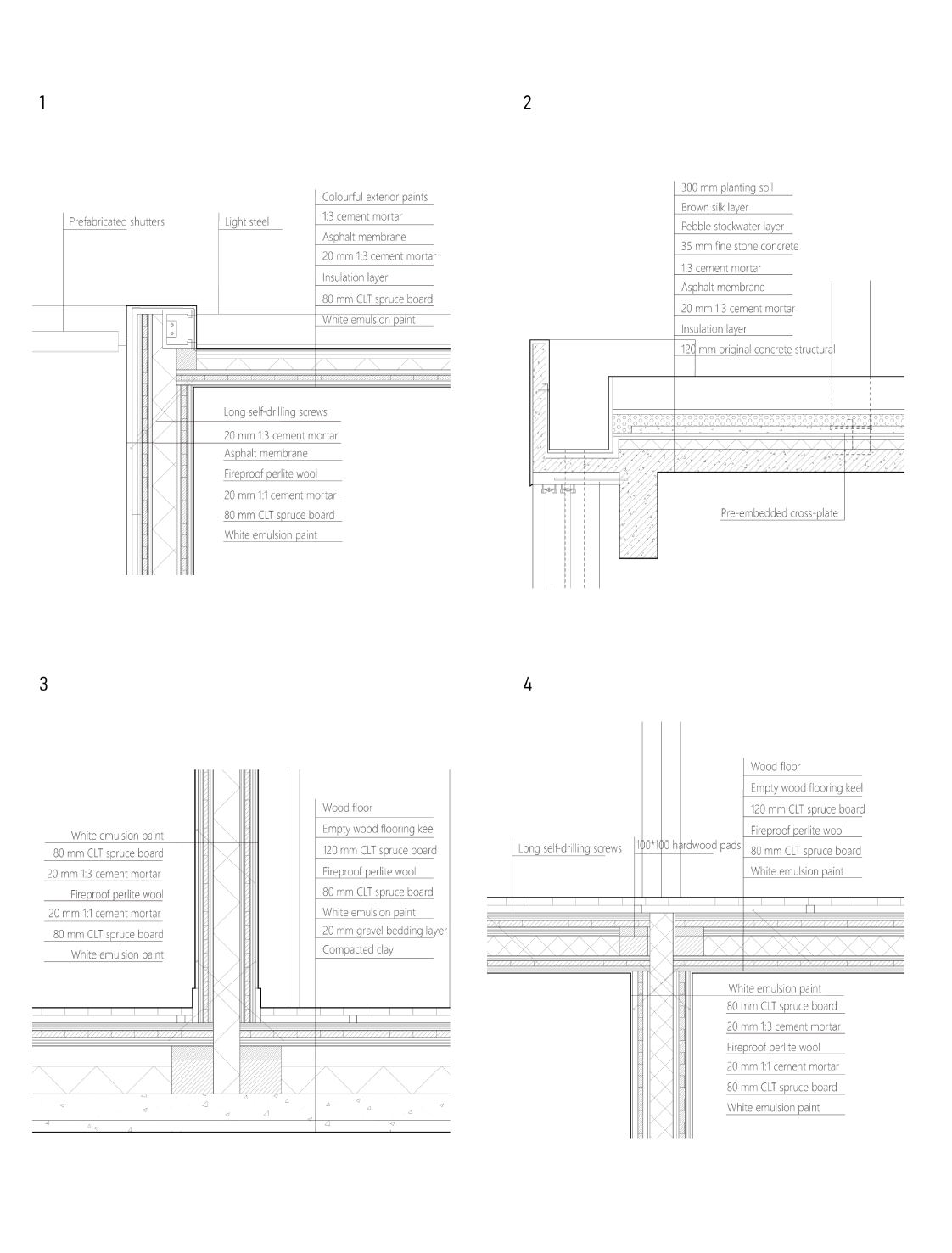
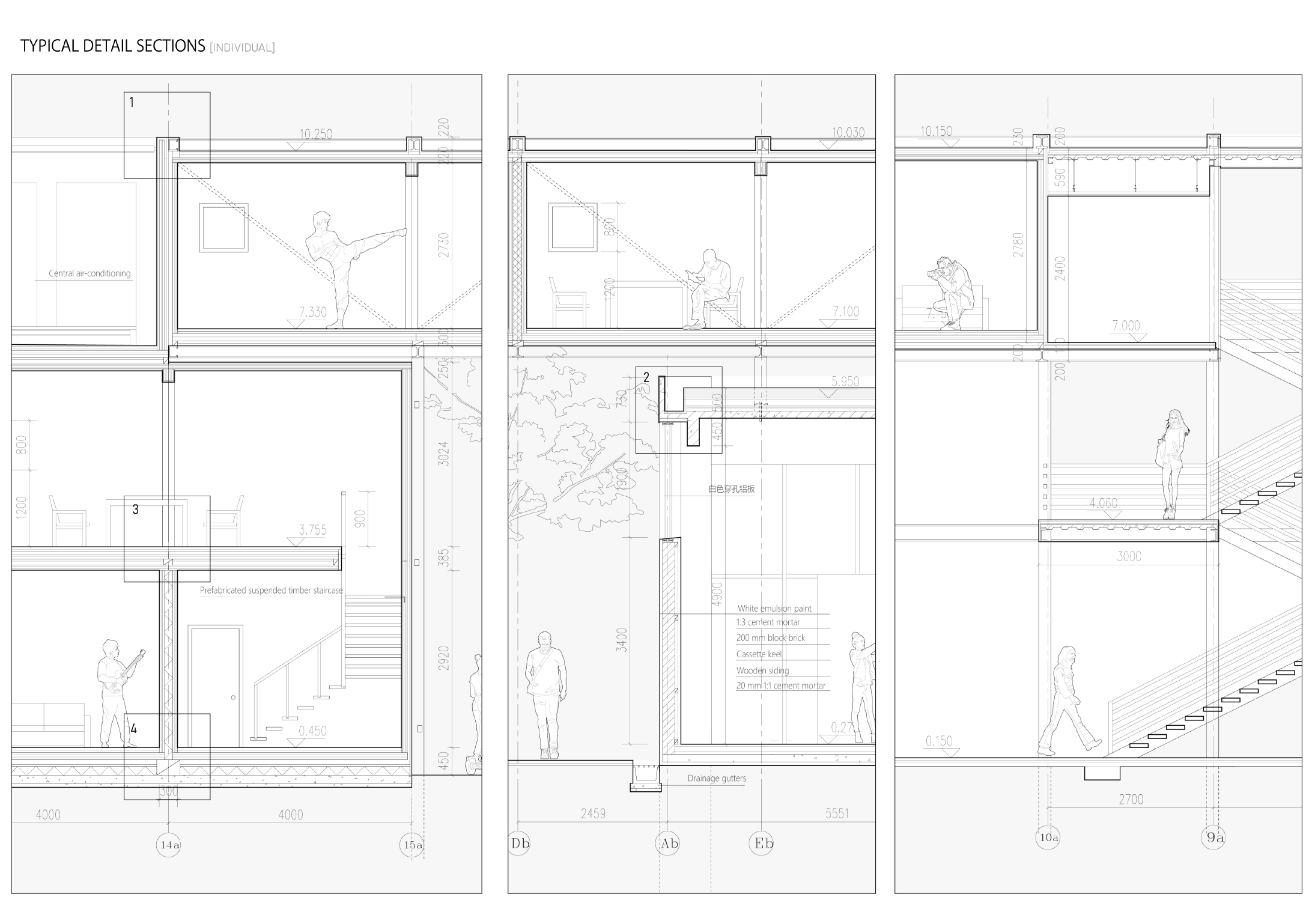
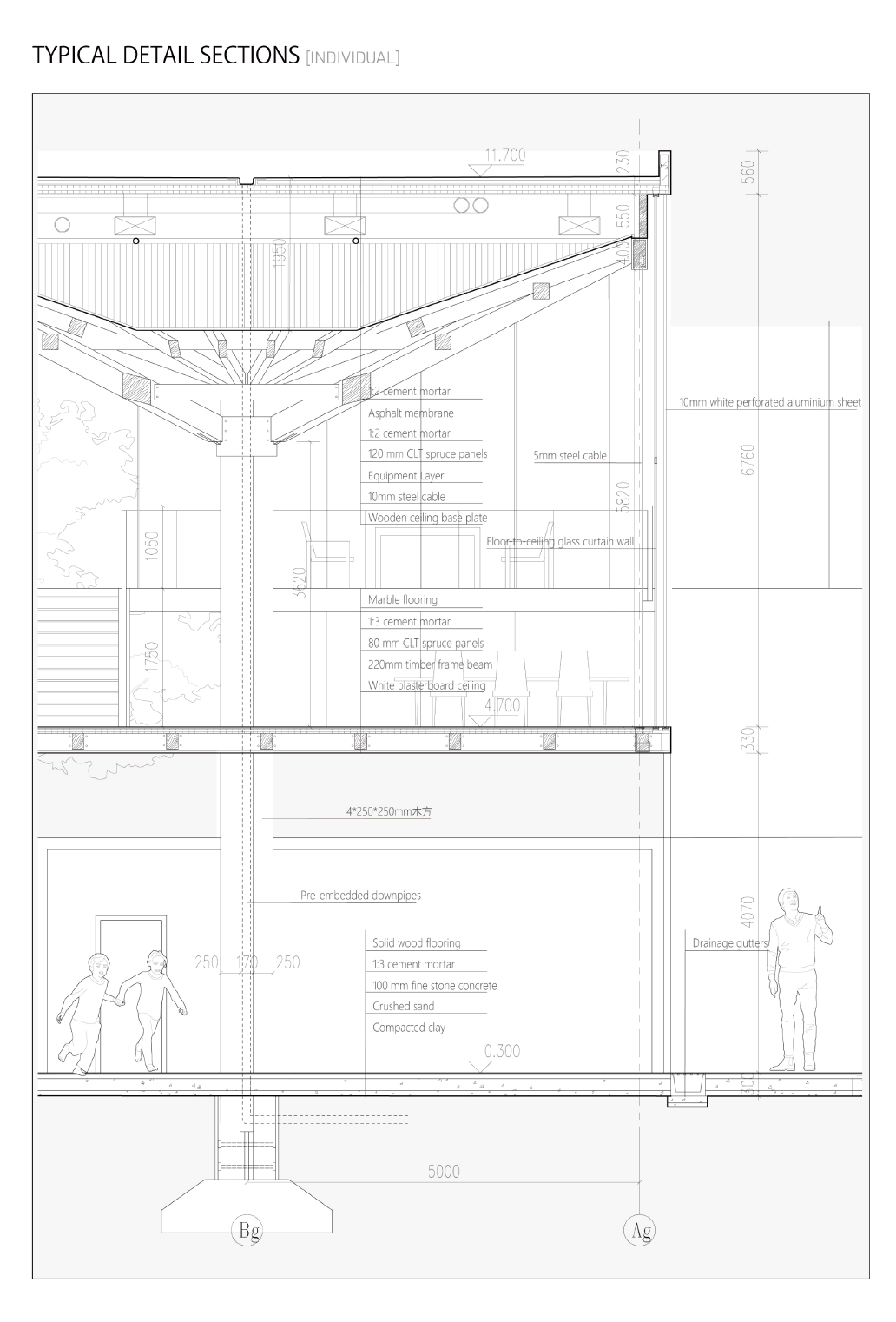
This project aims to renovate the site using a rapid and low-pollution construction method. Therefore, it plans to use local timber to create finished load-bearing panel components through CLT assembly. These components are assembled into basic 4*4 modules in the factory and transported by truck to the site for assembly.
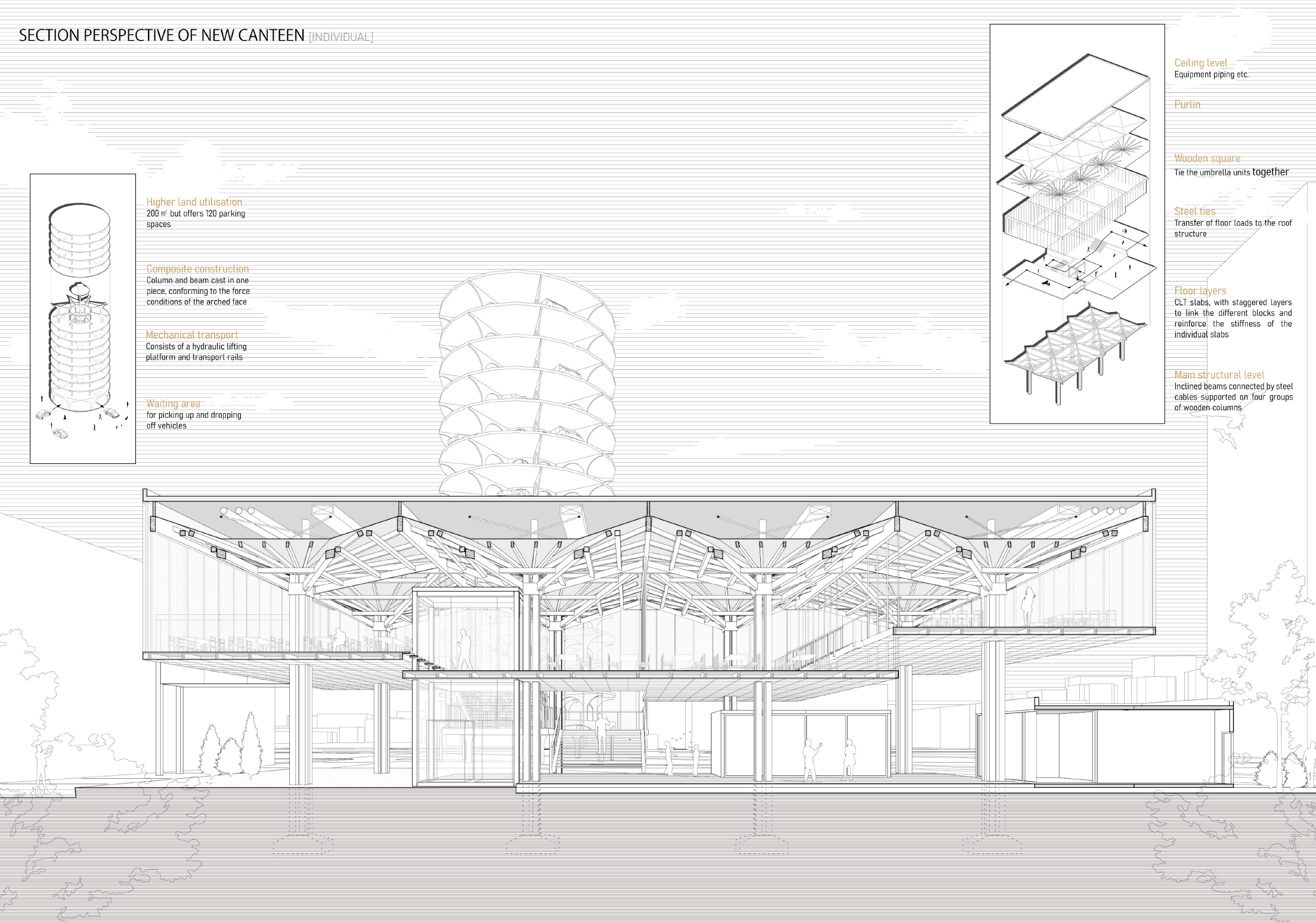
The entire area is a blend of new and old buildings. The southern section includes numerous personal spaces designed for student clubs; these ‘Tetris blocks’ can be freely combined and separated to accommodate emerging needs. Parts of the old buildings are retained to adapt to new requirements, providing diverse spaces and activity areas. The triangular area to the north is developed to meet the campus’s pressing needs for parking and dining facilities. The new cafeteria is directly opposite the old one, sharing a common kitchen to save human resources, while the parking tower offers a more efficient solution to parking issues.
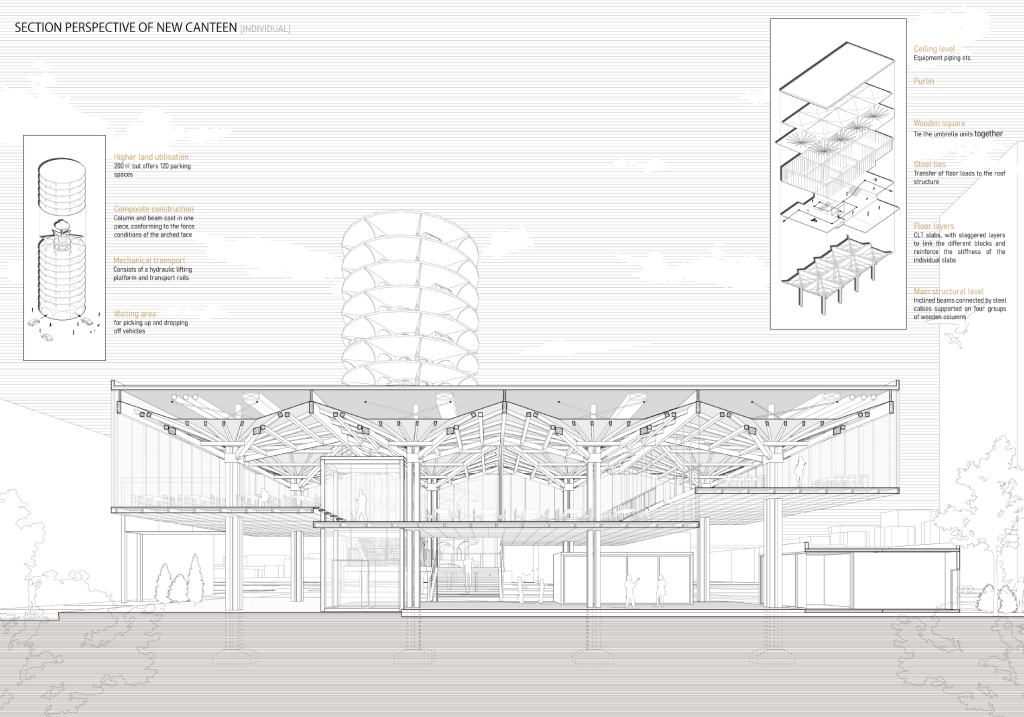
Because the second-floor cafeteria area connects different elevations, the new cafeteria structure employs a special suspension system, akin to an interior ceiling design. The second-floor slab is suspended by upper-level steel cables, which are supported by an umbrella-like wooden structure. There are eight of these wooden structures, interconnected with each other. Thanks to this design, the slab can float without needing columns for support or being at the same height. The ground floor space is used as a communal area for student club activities.